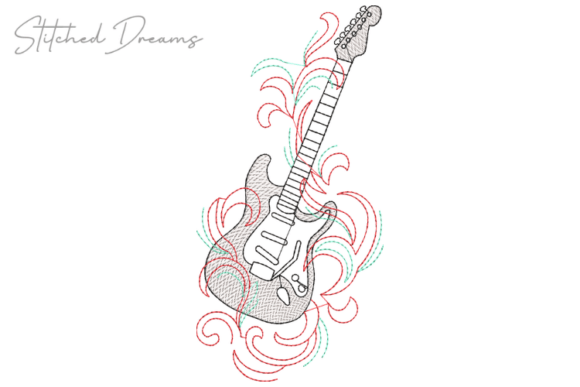
Guitar Embroidery Design Review for Merch
As an embroidery designer who has spent years digitizing files for boutique brands and large-scale commercial operations, I approach every new machine embroidery design with a critical eye. It is not enough for a file to look pretty on a screen; it must perform under the needle. Today, I am reviewing the Guitar Embroidery Design, a digital asset that promises to add a musical touch to various creations. For small business owners, this review focuses on practical application, brand alignment, and technical viability rather than just aesthetic appeal.
First Impressions and Visual Personality
The initial visual impact of the Guitar Embroidery Design suggests a blend of classic craftsmanship and creative flair. The description highlights a "beautifully detailed guitar," which immediately signals that this is not a minimalist icon but a statement piece. In the context of brand identity, this level of detail conveys professionalism and attention to quality. It feels less like a generic clipart and more like a custom illustration, which is crucial for handmade brands and Etsy sellers who rely on unique visuals to stand out.
The design leans towards a decorative yet bold aesthetic. For music lovers and creative studios, this vibe is perfect. It does not scream "corporate uniform" but rather invites a sense of community and shared passion. When evaluating this for small business merch, I see potential for it to serve as a centerpiece on tote bags or a prominent chest logo on staff apparel for music shops, cafes with live bands, or instrument repair services.
Real-World Business Applications
Where does this digital embroidery file truly shine in a commercial setting? I have tested similar detailed motifs across various substrates, and here is how this specific design fits into a product lineup.
- Embroidered Patches: This is arguably the strongest use case. A detailed guitar translates beautifully into a merrowed-edge patch. These can be sold as standalone accessories or used to upgrade plain denim jackets and caps, increasing the perceived value of the finished product.
- Custom Apparel for Staff: Imagine a local music venue or a guitar teaching studio. Using this design on polo shirts or button-downs creates a unified team look that is far more engaging than simple text logos. It adds personality to custom apparel without sacrificing professionalism.
- Tote Bag Design: Canvas totes are a staple for craft fairs and boutique retail. Placing this design centrally on a high-quality canvas bag creates a durable, washable advertisement for your brand. The "creative vibe" mentioned in the product description aligns perfectly with the eco-conscious, artistic demographic that buys reusable bags.
- Apron Embroidery: For bakeries, florists, or craft workshops that host music-themed events, embroidering this design on aprons adds a whimsical, thematic touch. It serves as a conversation starter and enhances the customer experience.
Technical Considerations and Placement Strategy
While the aesthetic is strong, technical execution is where many businesses stumble. The term "beautifully detailed" in the product description is a double-edged sword. High detail often means higher stitch density and finer lines. Here is what you need to watch out for before running a production batch.
Cap Embroidery Challenges: Curved surfaces are unforgiving. If you plan to use this on the front panel of a cap, ensure the design width fits within the standard 2.5 to 3-inch constraint. Detailed outlines can distort on curved fabric if the stabilizer is not robust. I recommend testing on a structured cap first to check for puckering.
Fabric Texture and Contrast: The success of this design depends heavily on thread colors and fabric choice. On textured fabrics like terry cloth or heavy canvas, fine details may get lost. Conversely, on smooth performance fabrics, the stitches will pop. Always check contrast. If the guitar body is dark, ensure the background thread or fabric provides enough separation so the shape remains recognizable from a distance.
Hoop Size and Scaling: Before purchasing, you must confirm the available hoop size options. If the design is only available in large formats, it may not be suitable for small pocket logos or sleeve accents. Scaling down a highly detailed design can result in thread breaks or merged stitches, ruining the clarity of the guitar shape.
Impact on Brand Identity and Customer Trust
Using a high-quality Guitar Embroidery Design does more than decorate an item; it reinforces your brand narrative. For businesses in the Music category, consistency is key. If your logo is clean and modern, but your merchandise features sloppy, pixelated prints, you lose trust. Embroidery offers a tactile premium feel that print cannot match.
When customers see a well-executed embroidered patch or logo, they subconsciously associate that durability and quality with your entire brand. It signals that you invest in your design assets. For Etsy sellers and handmade brands, this distinction is vital. It transforms a simple commodity into a collectible item. Furthermore, offering embroidered options allows for higher price points, directly impacting your profit margins.
Practical Designer Notes for Production
Before you integrate this file into your commercial workflow, follow these steps to ensure a flawless result. These are the same checks I perform for my own clients.
- Test in Black and White: Before selecting vibrant thread colors, stitch out the design in black thread on white fabric. This reveals the structural integrity of the digitizing. If the shape is unclear in monochrome, it will be unclear in color.
- Check Stitch Density: Run a test on scrap fabric similar to your final product. Feel the back of the embroidery. If it is stiff and board-like, the density may be too high for comfortable wear, especially on apron embroidery or shirts that touch the skin.
- Use Proper Stabilizer: Detailed designs require stable foundations. Use cut-away stabilizer for stretchy fabrics and tear-away for woven materials that do not stretch. Incorrect stabilization is the number one cause of registration errors in detailed motifs.
- Create a Printable Mockup: Use a printable mockup to visualize the design on different products before stitching. This helps in client approvals and marketing materials, saving time and thread waste.
- Verify Commercial Licensing: This is critical. Ensure the license included with the embroidery file permits commercial use for physical goods. Some designers restrict the number of items you can sell. Clarify this before launching your product line.
Final Verdict for Small Business Owners
The Guitar Embroidery Design is a versatile asset for any business targeting music enthusiasts or creative communities. Its strength lies in its ability to elevate simple garments into branded merchandise that feels personal and high-quality. However, its detailed nature demands respect in production. Do not rush the setup. Take the time to test hoop sizes, stabilize correctly, and choose fabrics that complement the stitch work.
For those looking to expand their commercial embroidery offerings, this design serves as an excellent addition to a seasonal collection or a niche product line. Whether used for staff uniforms, customer gifts, or retail patches, it carries the potential to strengthen brand recognition and drive engagement. Just remember to verify the technical specs provided by the creator, such as exact stitch count and format compatibility, to ensure a smooth production process. With careful execution, this design can become a staple in your portfolio of profitable, branded goods.